
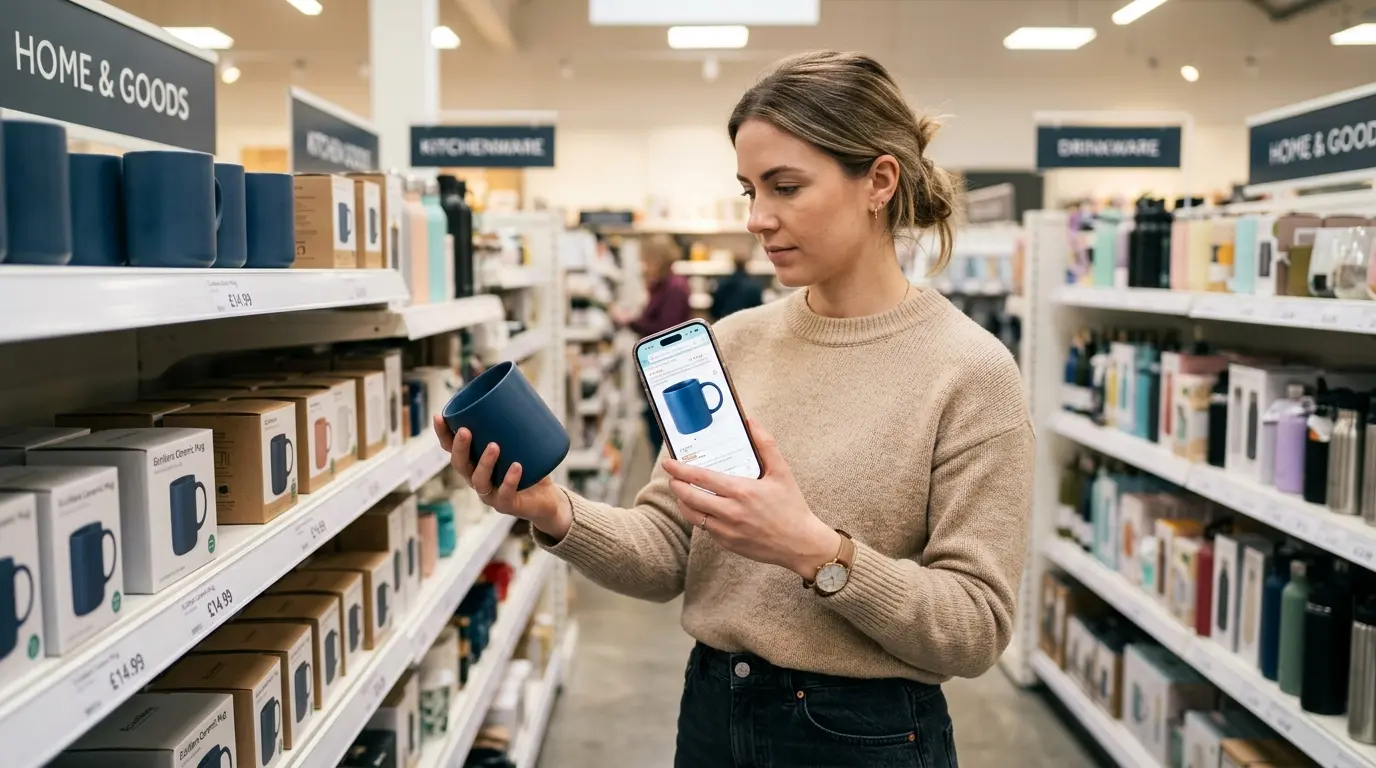
Daily online shopping frequency has dropped from 21% to 9% in a single year, and 60% of consumers now visit physical stores specifically to verify products before purchasing, according to Salsify‘s 2026 Consumer Research report, which surveyed nearly 3,000 shoppers across the United States, United Kingdom, and Canada. A separate survey of 13,000 consumers across 11 countries by enterprise mobile platforms firm Soti found that 41% of consumers have experienced fraud while shopping, and 88% think twice before buying from retailers that have suffered a cyberattack. Both reports are vendor-commissioned and have not been independently verified, but their directional findings align closely enough to suggest a structural shift in consumer purchasing behavior with direct implications for small and independent e-commerce operators.
What has changed is not simply that shoppers are spending less. They are spending differently – substituting speed for scrutiny, and convenience for confirmation. The one-click purchase model that defined a decade of e-commerce growth is running into a consumer base that has been burned often enough to treat every unfamiliar transaction as a risk to be managed.
What Is Actually Changing in Shopper Verification Behavior
The mechanics of the shift are specific. Salsify’s data shows that 67% of shoppers now webroom – researching products online before completing a purchase in a physical store – while the 60% who visit stores to discover new products are using those visits primarily as a verification step rather than a browsing one. Shoppers are cross-referencing prices on their phones while standing in store aisles and, in some cases, completing the purchase digitally to capture a better deal without losing access to the item they have physically confirmed.
Dom Scarlett, Research Director at Salsify, described the underlying dynamic: “Shoppers are buying less often, but with more intention. Durability and longevity are the strongest signals of value, which shows consumers are willing to spend when a product feels dependable and clearly represented.”
Scarlett also noted that positive reviews and social proof rank as the second-most-cited indicator of product quality, meaning shoppers are not just verifying physical attributes – they are auditing the reputational record of a product before committing.
The trust dimension extends beyond product quality into data security. Soti found that 51% of U.S. consumers have experienced fraud, and Shash Anand, SVP of product strategy at Soti, noted that a data breach now carries economic consequences – identity theft, unauthorized charges, financial exposure – that consumers increasingly factor into brand loyalty decisions. “Security concerns remain a significant barrier to long-term brand loyalty,” Anand said. “Trust is foundational.” The convergence of fraud exposure and economic pressure is what separates this behavioral shift from typical recessionary caution: shoppers are not simply trading down on price; they are recalibrating their entire risk calculus around a transaction that increasingly includes the possibility of fraud, defective goods, or stolen data.
Notably, the rise of AI-powered shopping recommendations has not filled the trust gap. Salsify found that only 14% of consumers trust AI recommendations – a figure that sits in sharp contrast to the broader industry momentum around agentic commerce tools that execute purchases autonomously on a shopper’s behalf.
The Opportunity and the Access Barriers for Smaller Operators
The verification trend creates a structural disadvantage for small e-commerce merchants that enterprise retailers can partially offset through brand recognition, established review volume, and physical store presence. An independent online merchant typically has none of those built-in credibility signals. A shopper who wants to touch a product before buying it, or who uses an in-store visit as a verification step, is by definition bypassing the small merchant who sells exclusively online.
The review dependency compounds the problem. Salsify’s data identifies social proof as the second-strongest quality signal for shoppers, but accumulating verified reviews takes time and transaction volume that newer or smaller merchants do not have. The broader erosion of consumer trust in digital retail means that even a well-run small merchant with legitimate products faces elevated skepticism that it did not generate and may not be equipped to overcome with existing resources.
Soti’s finding that 82% of consumers are cutting costs due to economic conditions adds a further layer: shoppers under budget pressure are less likely to take a chance on an unfamiliar seller, however low the price. The risk tolerance that once made the internet a democratizing force for small retailers is contracting. The Soti research was conducted across 11 countries and skews toward consumer-facing enterprise retail contexts, so its specific figures may not transfer directly to SMB e-commerce operators – but the directional pressure is consistent with what the Salsify data shows in the U.S., UK, and Canada.
What the Industry Is Building and What Merchants Can Do Now
Retail tech providers are doubling down on “phygital” tools that connect in-store experiences with real-time data. These are tools designed to reduce checkout surprises and keep shoppers from walking away, like handheld scanners and store tablets linked to inventory and pricing systems. At the same time, platforms like Bazaarvoice are investing in stronger review verification, as concerns about fake feedback continue to erode trust.
For smaller merchants without that kind of infrastructure, the focus is more practical. Clear, detailed product descriptions can reduce uncertainty before purchase. Actively collecting verified reviews helps build credibility. Transparent return policies can also ease hesitation, while visible security signals at checkout reassure customers increasingly wary of risk. The bigger unknown is whether today’s trust issues reflect a lasting shift in consumer behavior or a more temporary response to current conditions.