
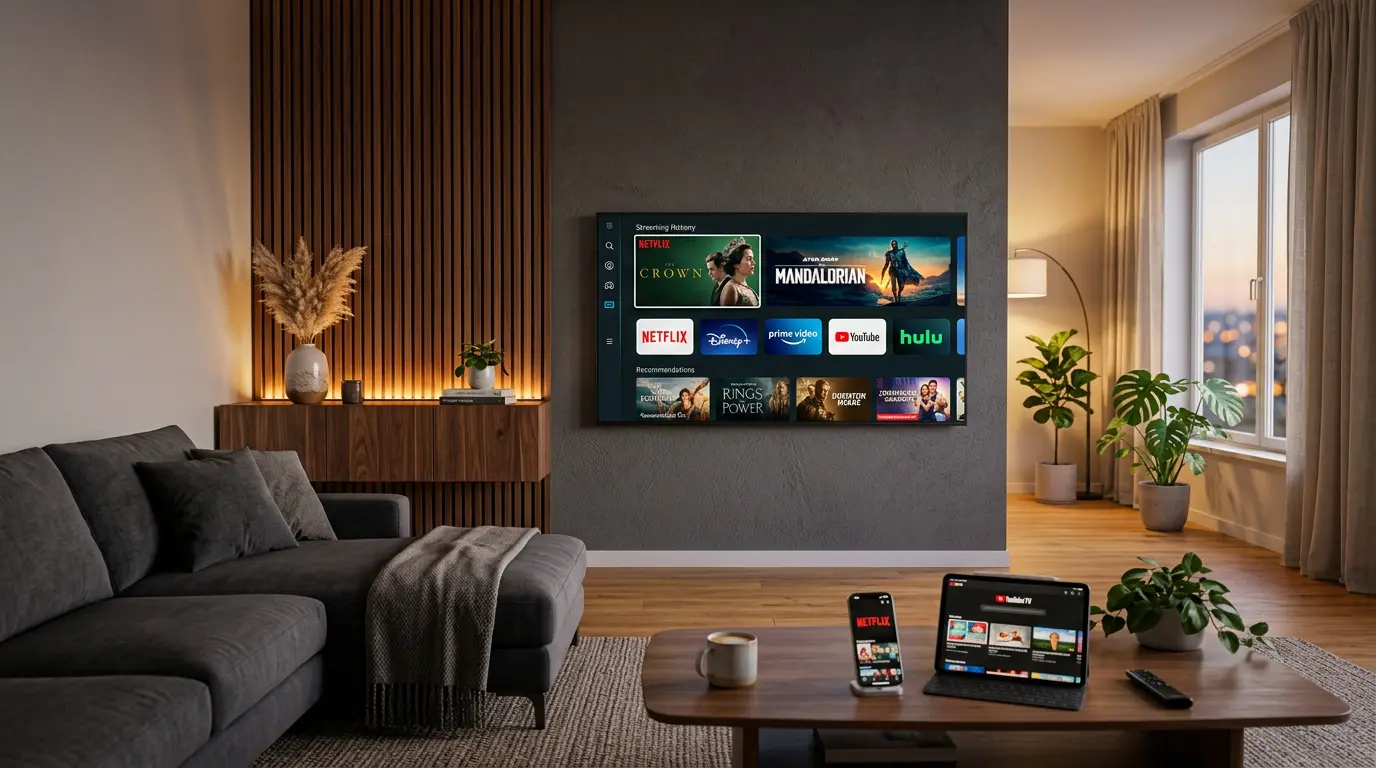
Ad-supported streaming now reaches 75% of U.S. households, and a report released Monday by market research company Circana argues that scale has quietly transformed television into a measurable commerce channel – not just a branding vehicle. The report, titled The Future of TV: Where Immersion Meets Commerce, found that connected TV (CTV) delivers 15% higher return on ad spend than linear TV and 21% higher than short-form video. For small and direct-to-consumer brands already weighing where to shift marketing budgets, those figures warrant attention – though the gap between enterprise CTV buys and what smaller operators can actually access remains significant.
The report projects that by 2030, Gen Z and millennials will drive 60% of U.S. retail sales growth – a demographic that no longer separates television from digital content, treating every screen as part of a single content system. That behavioral shift is what underpins TV’s transition from a passive reach channel to something closer to a transactional one.
What Is Actually Changing in TV Advertising
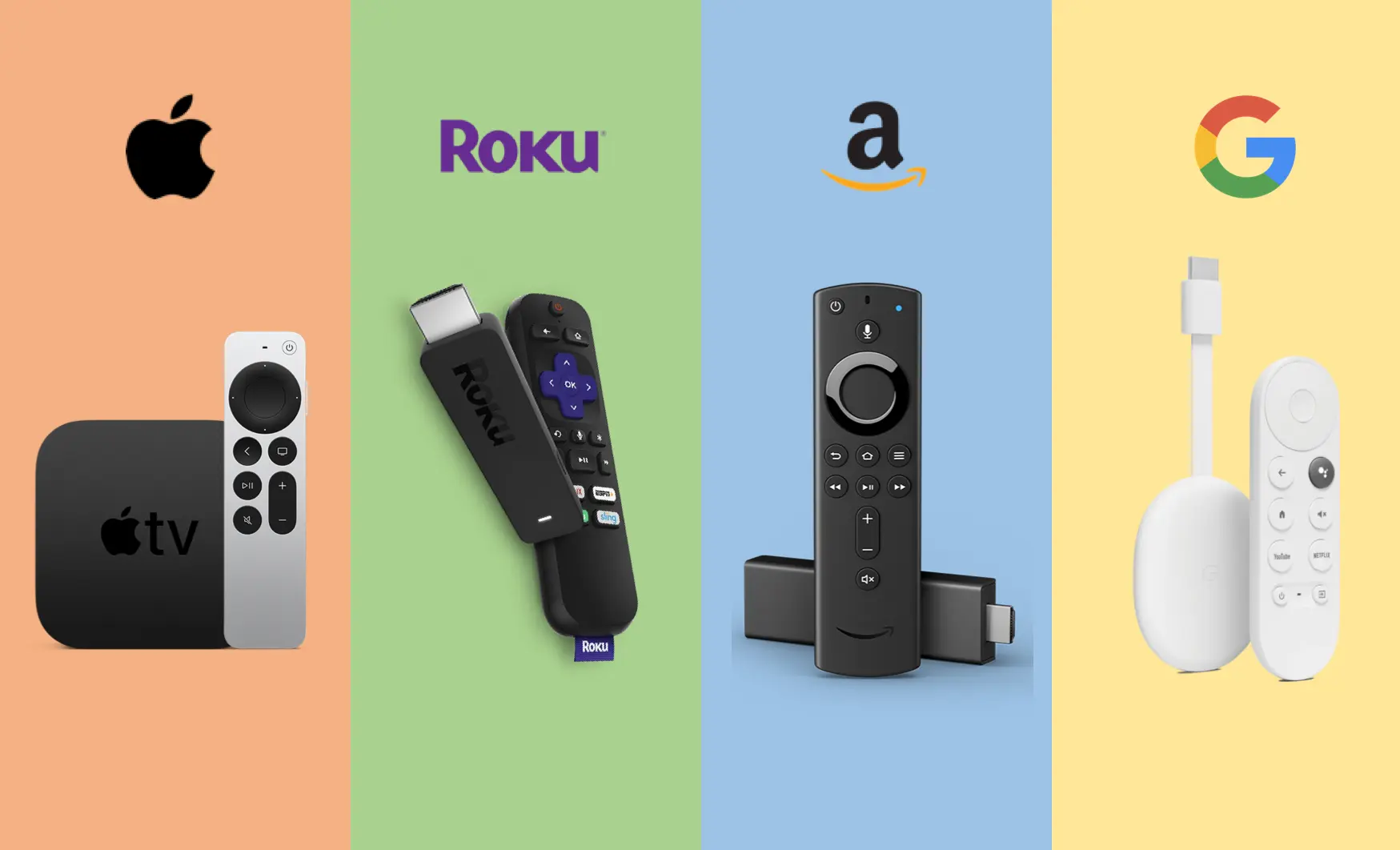
Connected TV refers to internet-enabled televisions and streaming devices – Roku, Fire TV, Apple TV, smart TV apps – that deliver targeted, trackable advertising rather than the broad demographic buys of traditional broadcast. The mechanics differ from linear TV in one critical way: CTV ads can be tied to downstream consumer behavior, allowing brands to measure whether a viewer searched, clicked, or purchased after seeing an ad.
Michael Goodman, senior contributing analyst with Parks Associates, described the shift as structural: “Ad-supported streaming turns video into a data-driven, interactive and measurable channel with more precise discovery, more dynamic storytelling and purchases that become immediate and tractable. That fundamentally reshapes how brands plan and execute campaigns.” That framing – TV as a full-funnel platform rather than a top-of-funnel awareness tool – is the core argument in the Circana report.
The interactivity, however, is less about clicking a remote and more about multi-screen behavior. Mike Pierce, streaming insights and data partnerships lead at JustWatch, noted that “the interaction is often happening around the TV rather than directly on the TV” – viewers watching on a large screen while simultaneously browsing or shopping on a second device. TV, in this model, functions as the trigger rather than the transaction point itself.
Katherine Cartwright, co-founder of Criterion Global, an international media buying agency, introduced an important qualifier: the technology has outpaced the measurement infrastructure. “The reality is that the technology has evolved faster than the means to universally measure it, and most advertisers don’t know how to measure video strategy holistically.” That gap matters particularly for smaller operators who lack dedicated analytics teams.
The Opportunity and the Access Barriers for Smaller Operators
The ROAS figures in the Circana report are based on Circana’s own research and have not been independently benchmarked. The report does not disaggregate results by advertiser size, meaning the performance data likely reflects campaigns run by brands with substantial production and media budgets. Small and midsize businesses face different entry conditions.
CTV ad inventory is available through self-serve platforms – including offerings from Roku, Amazon, and programmatic DSPs – with some minimum spend thresholds as low as a few hundred dollars, though meaningful reach typically requires budgets in the thousands per campaign. Production costs for video creative remain the larger barrier: a 15- or 30-second spot built for CTV needs to meet quality expectations that, as Aaron Smedley, GM of Shopify at Cloudinary, put it bluntly, leave no margin for error. “If something is slow to load, the quality is poor, or the content is not personally relevant, the consumer will move on very quickly, and that engagement is nearly impossible to recover.”
The youth audience dimension adds another layer of complexity. Younger viewers, who are the demographic driving the streaming shift, have a high tolerance for skipping irrelevant ads and a low tolerance for interruption-heavy formats. Cartwright framed their expectations directly: “They want relevance, lower ad loads, and control. That forces brands to earn attention, not just buy forced views.” For SMBs without sophisticated audience segmentation tools, achieving that relevance at scale is not straightforward. This mirrors a broader pattern in channel evolution where blanket outreach increasingly underperforms targeted, permission-based engagement.
What the Industry Is Building and What Merchants Can Do Now
At the platform level, major streaming services are expanding shoppable ad formats and QR code integrations that let viewers act on ads without leaving their viewing sessions. Retailers and brands with existing retail media partnerships are beginning to connect CTV exposure data to in-store or online purchase signals – a capability that, for now, is largely accessible only to mid-to-large advertisers with the data infrastructure to support it.
Tavares Beverly, president of Beverly Boy Productions, identified the organizational obstacle many brands face: production, marketing, and sales still operate as separate departments with separate budgets. “Connected TV has the potential to break down barriers and reduce the distance between these two so that each production works simultaneously as entertainment, persuasion, and point-of-purchase,” Beverly said. That kind of integration requires upfront coordination that most SMBs are not structured to execute without outside help.
For smaller operators exploring CTV without enterprise resources, a few concrete starting points emerge from the reporting. Self-serve CTV platforms allow budget-capped test runs that can be measured against website traffic or purchase lift. QR codes embedded in ad creative provide a low-tech attribution mechanism that does not require a data partnership. Prioritizing streaming platforms with strong contextual targeting (in other words, placing ads adjacent to content relevant to a brand’s category) addresses the relevance problem Smedley and Cartwright both flagged. And keeping creative short, fast-loading, and specific to a defined audience segment reduces the risk of the abandonment that they describe.
Whether CTV’s measurable performance advantages will translate to smaller advertisers at accessible budget levels, or whether the channel’s gains will continue to accrue primarily to brands with the production budgets and data infrastructure to fully exploit it, remains the question the Circana report raises without fully resolving.