

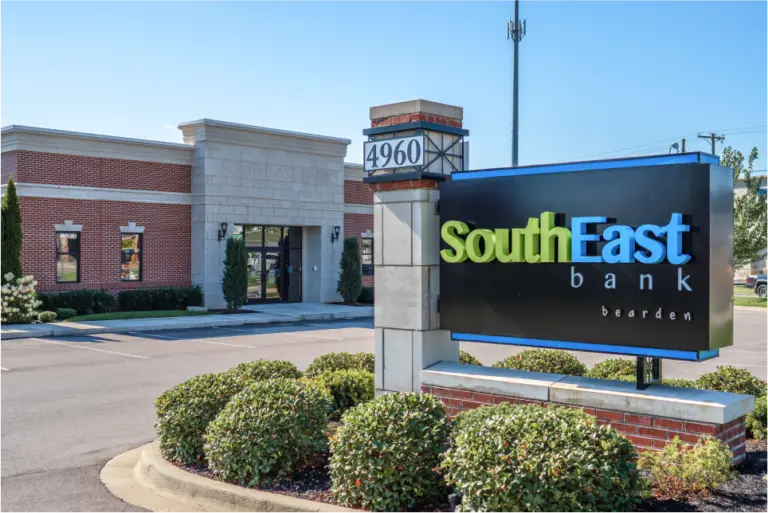
A survey of nearly 200 small business owners released by SouthEast Bank, the Farragut, Tennessee-based community bank with $3.3 billion in assets, finds that 94% of respondents consider personalized service important – and that 30.7% rank it as their single most valued banking attribute, placing it ahead of competitive rates, digital tools, and local loan decision-making. The finding carries practical weight beyond the bank’s own client base: the survey drew responses from small business customers of both SouthEast Bank and other financial institutions, making the preference data applicable across provider types rather than a measure of satisfaction with one institution alone.
Survey Scope: Nearly 200 SMB Respondents Across Multiple Institutions
The digital survey was conducted by SouthEast Bank and released during Small Business Month. Respondents included current small business clients of SouthEast Bank alongside small business owners banking with various other financial institutions – a design that allows for direct satisfaction comparisons between provider types. The survey does not disclose a third-party research partner or a specific field period, and as a corporate-commissioned instrument it carries the standard caveats of sponsored research. That said, the sample composition – spanning multiple institutions rather than the commissioning bank’s clients alone – limits the most obvious source of bias, and the methodology is disclosed clearly enough to treat the directional findings as credible signals rather than marketing artifacts.
The Tennessee context is material here. According to the U.S. Small Business Administration’s Office of Advocacy, there are more than 740,000 small businesses in Tennessee, representing 99.5% of all businesses in the state. Those firms employ 1.2 million people – 41.5% of all Tennessee employees – and the Tennessee Department of Economic and Community Development estimates their combined revenue at more than $5 trillion.
Personalized Service and Local Decisions Outrank Rates and Technology
Across all respondents, the two most valued banking attributes were personalized service (30.7% named it first) and local loan decision-making (28.4%), leaving competitive rates at 20.5% and digital banking tools at 17%. The gap is notable: the top two relationship-oriented attributes combined account for nearly 59% of first-choice responses, more than doubling the combined share of rates and technology at roughly 37.5%. That ranking holds even though 93% of respondents said local loan decisions are important – a near-universal acknowledgment of relevance that still did not elevate rates or digital tools to the top of the preference hierarchy.
The satisfaction differential between SouthEast Bank customers and those of other institutions reinforces the pattern. More than 93% of SouthEast Bank customers said they were likely to recommend the bank, compared with 78% of respondents banking elsewhere – a 15-percentage-point gap that respondents attributed primarily to personalized service, named banker relationships, responsiveness, and local decision authority. Customers at other institutions most frequently cited impersonal service, slow response times, limited local flexibility, and high or unclear fees as sources of dissatisfaction.
“Business owners want a banking partner who knows them, understands their cash flow and financial needs and responds quickly.”
– Melissa Maciejewski, Vice President, Regional Banking Manager, SouthEast Bank
Where Digital Tools Fall Short – and Where They Still Matter
The data does not position digital tools as irrelevant – it positions them as insufficient on their own. While only 17% of respondents chose digital banking tools as their most valued attribute, 41% said technology would influence a decision to switch banks. That gap between stated priority and stated switching trigger suggests digital capability functions more as a threshold requirement than a differentiator: deficiencies can cost a bank a customer, but superiority alone is unlikely to win one. The parallel dynamic is visible in the rate data – 74% said rates would influence switching, even though only 20.5% named rates as their top attribute, suggesting pricing is similarly a hygiene factor rather than a loyalty driver.
For operators evaluating whether to prioritize digital banking features when choosing or switching providers, the survey implies that the decision calculus is asymmetric: inadequate digital tools or uncompetitive rates create friction and exit risk, but neither generates the positive loyalty that relationship quality and local decision access appear to produce. SMB finance software adoption data shows that small businesses are adding digital tools selectively, but the survey data suggests those additions are evaluated against a relationship baseline rather than replacing it.
Findings Align With Federal Reserve Survey Data on Community Bank Satisfaction
The preference pattern the SouthEast Bank survey describes is consistent with the Federal Reserve’s Small Business Credit Survey, which has found year over year that small bank and credit union applicants report the highest satisfaction scores among lender types – reaching approximately an 81% net satisfaction score for community banks versus 68% for large banks and substantially lower figures for online lenders. The Fed data also shows that small bank applicants are more likely to be fully approved for financing than applicants at large banks, finance companies, or online lenders, and that online borrowers most frequently report higher-than-expected borrowing costs. The SouthEast Bank survey’s finding that relationship quality drives satisfaction more than pricing or digital features tracks directly with that nationally representative pattern.
Broader SMB sentiment data adds context without contradicting the banking preference finding. NFIB survey data on small business optimism has documented persistent caution among small business owners on capital expenditure and borrowing – an environment in which the friction cost of a poor banking relationship (slow approvals, unclear criteria, unresponsive loan officers) is amplified, making the relationship-quality preference practically consequential rather than merely aspirational.
What the Data Means for Operators Evaluating Banking Relationships
For operators currently weighing a banking relationship change, the survey data provides two concrete reference points. First, the 15-percentage-point recommendation gap between community bank customers and those at other institutions suggests that relationship quality is measurable and consequential – not a soft preference but a factor that correlates with whether a business owner would stake their reputation on referring a peer. Owners dissatisfied with response times, fee transparency, or local decision access are exhibiting the same frustrations the survey’s other-institution respondents named, and the data suggests those frustrations are common rather than idiosyncratic.
Second, the structure of the switching triggers – rates at 74%, technology at 41% – implies that community banks operating with competitive but not market-leading rates retain an advantage as long as relationship quality holds. The risk scenario for relationship-oriented institutions is not a technology gap per se but a service quality deterioration that allows rate sensitivity to become the deciding factor. As financial services companies expand AI-assisted advisory tools – a development illustrated by initiatives like Mastercard’s AI-driven SMB support models – the question for community banks is whether hybrid service models can preserve the relationship depth that currently drives their satisfaction advantage.
Indicators to Watch
- Federal Reserve Small Business Credit Survey (annual) – The Fed’s next SBCS release will provide nationally representative, provider-type-segmented satisfaction data to confirm or complicate the directional preference findings from the SouthEast Bank survey, particularly whether the community bank satisfaction premium over large banks and online lenders holds as digital service capabilities converge.
- FDIC Community Banking Study updates – FDIC tracking of community bank loan market share in small business segments will indicate whether the stated preference for local decision-making is translating into measurable deposit and lending flows toward smaller institutions or being offset by rate and convenience factors.
- NFIB Credit Conditions Sub-Index – Monthly NFIB data on small business borrowing satisfaction and loan availability will signal whether the relationship-quality frustrations documented in the survey – slow approvals, unclear criteria, limited local authority – are intensifying or easing across the broader SMB population.
- Community bank net promoter and retention metrics – As more regional and community banks publish or disclose customer satisfaction benchmarks, the 93% recommendation rate SouthEast Bank reports will become easier to evaluate against peer institutions – and will indicate whether relationship-banking satisfaction is a differentiator or increasingly a category standard.
- Hybrid service model rollouts at large banks and fintechs – Large bank and fintech announcements of dedicated SMB relationship manager programs or AI-assisted advisory channels will test whether the satisfaction gap the survey identifies between community banks and larger institutions can be closed through technology-enabled personalization rather than structural relationship depth.