

U.S. citizens and permanent residents owe federal income tax on worldwide income regardless of where they live or work – a citizenship-based taxation model that catches a growing number of remote workers and digital nomads off guard. With more than 60 countries now offering digital nomad visas, the IRS’s reach follows American workers to every time zone, and failing to account for it can trigger penalties, back taxes, and compliance obligations that dwarf the original liability.
How the worldwide income rule works for remote employees and self-employed owners
The Internal Revenue Service taxes U.S. citizens and green card holders on their global income – freelance contracts, remote salaries, consulting fees, and pass-through business income – whether or not that income was already taxed by another country. Residence abroad does not suspend the filing requirement; it changes only what relief mechanisms are available.
The distinction between W-2 employees and self-employed individuals matters here. A U.S. citizen on a domestic employer’s payroll working from Lisbon still has federal income tax withheld at source, but self-employed contractors and sole proprietors operating abroad remain responsible for both income tax and self-employment tax – covering Social Security and Medicare at a combined 15.3 percent – on net earnings above $400. The Foreign Earned Income Exclusion, described below, reduces income tax exposure but does not eliminate self-employment tax liability.
What the Foreign Earned Income Exclusion covers and how to qualify
The Foreign Earned Income Exclusion (FEIE) allows qualifying U.S. taxpayers to exclude up to $130,000 of foreign earned income from federal taxation for the 2025 tax year, claimed by filing Form 2555 with the annual return. The exclusion is indexed annually and applies only to earned income – wages, salaries, and self-employment income derived from services performed abroad. Passive income, capital gains, and U.S.-source income are not covered.
Qualifying requires passing one of two IRS tests. The Physical Presence Test requires the taxpayer to spend 330 full days outside the United States within any consecutive 365-day period – a threshold that a single extended visit home for client meetings or holidays can break. The Bona Fide Residence Test requires establishing genuine residence in a foreign country, demonstrated through factors such as a long-term lease, a digital nomad residency visa, or local tax registration. Workers relying on the Physical Presence Test should maintain a dated travel log, since day counts are auditable.
Electing the FEIE also has a trade-off: taxpayers cannot apply the Foreign Tax Credit (discussed below) to income they have already excluded. For founders and consultants based in high-tax jurisdictions – Germany or France, for example – where foreign rates may exceed U.S. rates, the Foreign Tax Credit claimed on Form 1116 can eliminate U.S. liability entirely while preserving eligibility to contribute to U.S. retirement accounts, making it the more advantageous election in many high-income scenarios.
What business owners owe when employees work remotely from another country
For U.S. employers, a remote worker abroad creates obligations that extend well beyond the employee’s personal return. A U.S. company generally remains required to withhold federal income tax and FICA contributions for a U.S. citizen employee working overseas unless a totalization agreement applies. The IRS allows employees who reasonably expect to qualify for the FEIE to submit Form 673 to their employer, which permits reduced or eliminated federal withholding – but without that form on file, employers are expected to withhold as if the worker were stateside, creating cash-flow friction for the employee and administrative exposure for the company.
A more consequential risk for business owners is permanent establishment. A single employee working from a foreign country – particularly one negotiating contracts, generating local revenue, or maintaining a fixed workspace – can create a taxable presence for the U.S. entity under that country’s corporate tax rules, potentially triggering local payroll registration, VAT obligations, and foreign income tax on attributed profits. Country-specific legal review is required before approving long-term international remote arrangements; the exposure varies significantly by jurisdiction and cannot be assessed using U.S. rules alone.
The Social Security Administration publishes a current list of countries with U.S. Totalization Agreements – currently covering more than 30 nations – that coordinate Social Security coverage to prevent double taxation of the same wages. Where an agreement applies, the employee and employer contribute to only one country’s system, not both.
How the Foreign Tax Credit reduces double-taxation exposure
Taxpayers who pay income tax to a foreign government can offset their U.S. liability dollar-for-dollar using the Foreign Tax Credit, filed on Form 1116. The credit is subject to a per-country limitation – it cannot exceed the U.S. tax attributable to the foreign-source income – but for workers in countries with higher marginal rates than the United States, it can reduce U.S. tax to zero on that income.
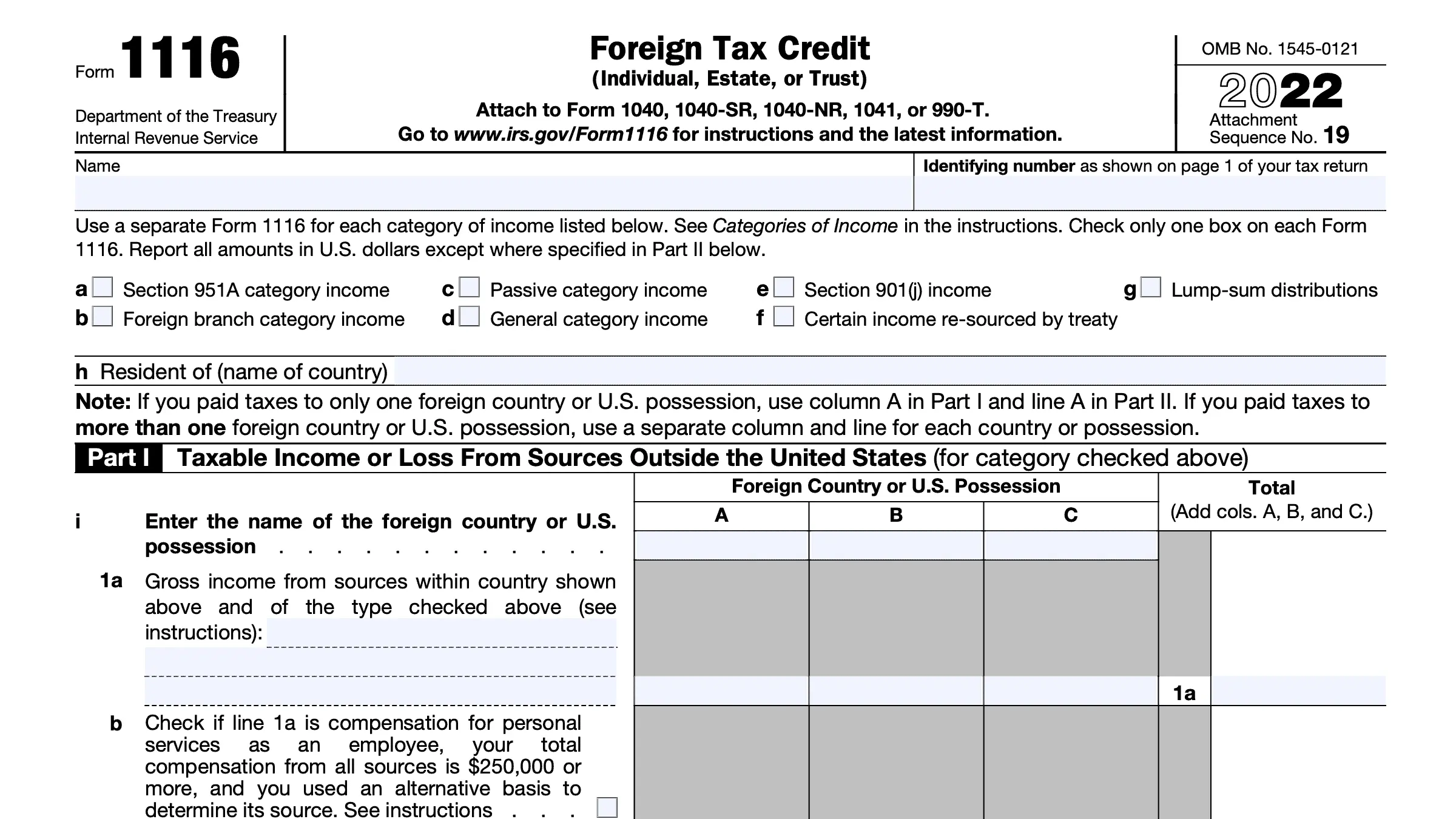
The FEIE and the FTC cannot both apply to the same income in the same year. Electing the FEIE permanently excludes that income from FTC treatment unless the election is formally revoked. For self-employed owners and founders drawing income from high-tax countries, that election decision has compounding consequences and warrants specific advice rather than a default choice.
Most U.S. bilateral tax treaties offer limited benefit to Americans residing abroad – the saving clause in nearly every U.S. treaty preserves the right to tax U.S. citizens as if the treaty did not exist. Some treaties reduce withholding on specific income categories such as royalties or retirement distributions, and treaty-based positions must be disclosed on Form 8833.
State taxes add another layer for remote workers and their employers
Leaving the country does not automatically sever state tax obligations. California and New York both apply aggressive residency standards – maintaining a mailing address, voter registration, active bank accounts, or making frequent return visits can sustain a state filing requirement even for a worker living abroad full time. Neither state recognizes the FEIE or the Foreign Tax Credit, meaning foreign earned income that is fully excluded at the federal level may still be taxable at the state level.
New York applies a “convenience of the employer” doctrine that can treat days worked outside the state as New York workdays if the remote arrangement is for the employee’s convenience rather than a business necessity of the employer – a rule that state-level tax policy debates have highlighted as particularly burdensome for founders and self-employed professionals managing income across jurisdictions. Some nomads establish domicile in a state with no income tax – Florida is a common choice – before relocating abroad, but that move requires complete and documented severance of prior-state ties.
Key filing deadlines and forms for U.S. taxpayers and businesses abroad
U.S. taxpayers living outside the country on the standard April 15 filing deadline receive an automatic two-month extension to June 15 – but interest on any unpaid tax still accrues from April 15. A further extension to October 15 is available by filing Form 4868. The extended deadlines apply to income tax returns only; FBAR and FATCA filings follow separate calendars.
The core forms and thresholds applicable to remote workers and their employers:
- Form 2555 – claims the Foreign Earned Income Exclusion; filed with the annual Form 1040
- Form 1116 – claims the Foreign Tax Credit against taxes paid to a foreign government
- FinCEN Form 114 (FBAR) – required when aggregate foreign financial account balances exceed $10,000 at any point during the year; due April 15 with an automatic extension to October 15. Non-willful failure carries a penalty of up to $10,000 per violation; willful failure carries penalties of up to the greater of $100,000 or 50 percent of the account balance per violation
- Form 8938 (FATCA) – required at higher asset thresholds ($50,000 for single filers on the last day of the tax year, or $75,000 at any point); filed with the income tax return
- Form 5471 – required when a U.S. person owns or controls a foreign corporation; triggers Global Intangible Low-Taxed Income (GILTI) calculations that can produce unexpected U.S. tax on foreign corporate earnings
The IRS has flagged international reporting failures as a consistent compliance priority – a pattern covered in the agency’s 2026 Dirty Dozen list of major small business tax risks. Missing FBAR or FATCA deadlines generates penalties that frequently exceed the account balances involved.
Steps business owners should take before approving remote work abroad
Employers should audit their workforce to identify which remote employees are U.S. citizens or green card holders currently working outside the country, and in which jurisdictions – many companies approved temporary international arrangements during the pandemic and never formally reassessed the ongoing compliance posture.
Before authorizing any long-term international remote arrangement, review withholding obligations with a tax advisor and confirm whether the target country has a Totalization Agreement with the United States. Employees working in covered countries may need to apply for a certificate of coverage to document which country’s Social Security system applies and avoid dual contributions.
Assess permanent establishment risk in the foreign jurisdiction before the worker relocates, not after. The exposure varies significantly – some countries have de minimis thresholds for short-term business presence, while others treat a single employee as sufficient to constitute a taxable branch. Workers who will open foreign bank accounts or hold foreign financial assets should calendar FBAR and FATCA deadlines separately from income tax deadlines at the start of each year, since the reporting obligations attach to account balances at any point during the year, not just at year-end. For self-employed founders considering a foreign corporate structure to manage liability or taxes, the GILTI rules and Form 5471 reporting requirements make that decision considerably more complex than it appears – a straightforward U.S. LLC paired with proper international tax planning frequently produces a simpler compliance profile than a foreign entity.