
Google announced on June 10, 2026, a set of new Gemini app features designed specifically for small business operators, centered on two capabilities: direct integration with Google Business Profile data and a new organizational tool called Business notebooks. According to Google‘s own characterization, which has not been independently benchmarked, the updates transform Gemini into what the company described in its blog post as “a deeply knowledgeable, in-pocket partner that natively understands your business and helps you get more done” – a claim drawn from internal product framing rather than from third-party performance audits. The rollout is global and began in June 2026, targeting small business owners who already use Google Business Profile to manage their search and maps presence. What operators need to understand beyond the announcement framing is which specific workflows the tools actually automate, what the integration requirements and cost structure look like in practice, and which business profiles are least likely to see the gains Google has characterized.
What Is Actually Changing in Gemini for Small Business
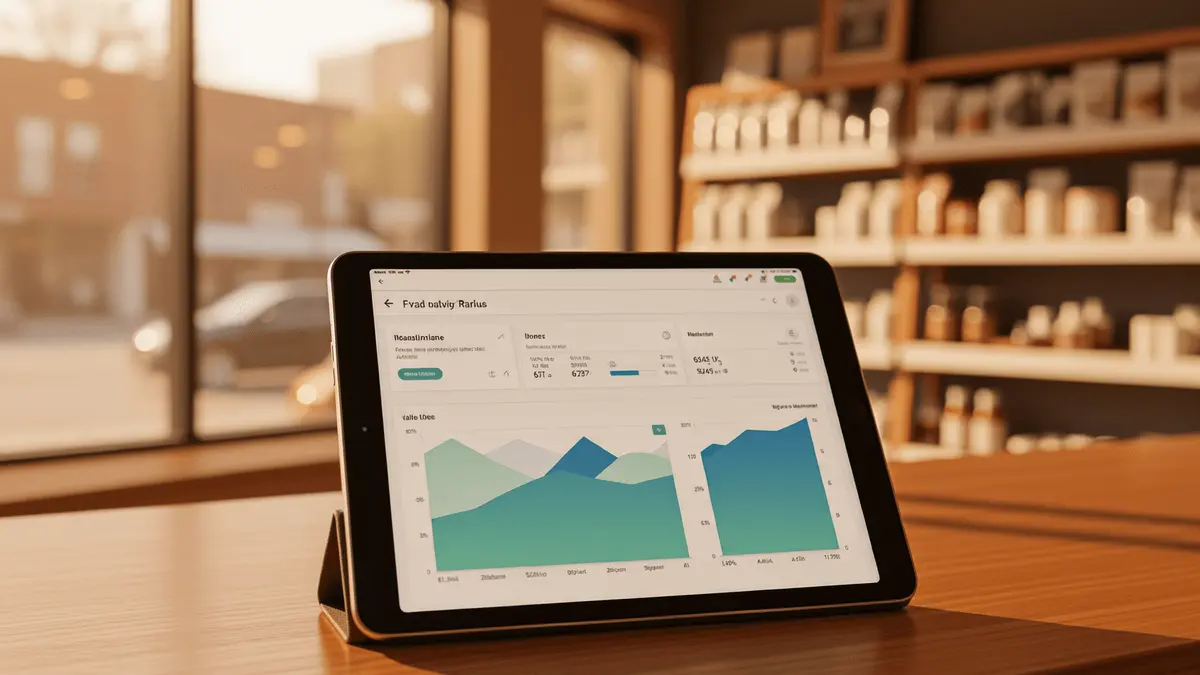
The most operationally significant new feature is the ability to connect a Google Business Profile directly to Gemini, giving the AI assistant access to customer reviews, customer questions, and performance data associated with that profile. Once connected, a business owner can submit natural-language queries – Google‘s own example being “How did my business do this month?” – and Gemini will draw on search impressions, direction requests, call data, and customer engagement metrics to generate a response. This eliminates the manual step of navigating the Google Business Profile dashboard to pull the same figures, though the analytical depth of those responses compared to direct dashboard review has not been independently tested.
The second feature, Business notebooks, functions as a structured knowledge container within Gemini, allowing operators to consolidate chats, external sources, Business Profile data, and website content into a single organizational unit. Google characterized the value of this structure not primarily as organization but as contextual grounding – the premise being that a Gemini instance with persistent access to a business’s own data will produce more relevant content recommendations, brand-consistent creative assets, and more accurate competitive brainstorming than a general-purpose AI query would.
“This gives Gemini all the context it needs to provide recommendations and content that’s relevant to your business, and allows you to offload complex, time consuming tasks.”
– Google, company blog post published June 10, 2026. The statement describes design intent and integration architecture; it does not quantify time savings, content accuracy rates, or task completion benchmarks under real small business operating conditions.
“With this understanding, you can quickly analyze business trends, generate creative assets that match your brand and use Gemini to brainstorm your next idea based on your customer reviews.”
– Google, company blog post published June 10, 2026. The statement characterizes intended use cases and does not provide independently measured data on output quality, brand consistency accuracy, or review-analysis reliability across varied business categories.
Google has not disclosed in its June 10 announcement whether these features are available to all Gemini users or gated behind specific paid tiers. The company’s existing Gemini Business tier for Google Workspace users is priced at approximately $20 per user per month on top of core Workspace subscription fees, which themselves range from roughly $6 to $18 per user per month depending on plan, while Gemini Enterprise runs approximately $30 per user per month. Whether the Business Profile integration and Notebooks features are available at the free Gemini tier, bundled into existing Workspace plans, or require a separate add-on subscription has not been addressed in the company’s public materials at the time of this writing.
The Opportunity and the Access Barriers for Smaller Operators
The clearest concrete benefit for small business operators is the consolidation of data review time. A business owner who currently checks Google Business Profile analytics manually – cross-referencing search impressions, call volume trends, and review patterns across separate dashboard views – would, under Google‘s framing, be able to ask a single question and receive a synthesized summary. For sole proprietors managing customer-facing presence without dedicated staff, that compression of information-gathering steps represents a measurable operational gain, assuming the outputs are accurate.
The barriers, however, are less visible but worth examining. The first is the integration prerequisite: the Business Profile connection only delivers value to operators who have a verified, actively maintained Google Business Profile with sufficient review and performance data to analyze. Businesses with sparse review histories, recently created profiles, or profiles in categories that generate low search-query volume may find the analytical outputs thin or unreliable. Google has not specified a minimum data threshold for meaningful output.
The second barrier is pricing opacity. As noted above, Google has not clarified which Gemini subscription tier unlocks the new features. Small operators evaluating these tools cannot currently calculate their all-in monthly cost without that information, which makes budget-based procurement decisions premature. Operators already paying for Google Workspace Business Starter at $6 per user per month should verify whether a Gemini add-on is required before assuming the features are included.
A third consideration is platform dependency. The Notebooks feature and Business Profile integration both extend a small business’s operational reliance on Google‘s ecosystem. Operators who use non-Google tools for CRM, scheduling, or customer communication will not see those data sources reflected in Gemini‘s context unless they are manually imported. Research on how SMBs evaluate AI implementation decisions consistently surfaces data fragmentation as a primary barrier – a condition the Notebooks structure addresses only partially, and only within Google‘s own data layer.
A fourth issue is the unverified nature of the content generation claims. Google characterizes Gemini as able to generate “creative assets that match your brand” based on Notebooks context. Brand consistency in AI-generated content is a function of prompt quality, source data richness, and model calibration – none of which Google has benchmarked publicly for the small business use case. Operators relying on Gemini for customer-facing content should plan to review outputs before publication rather than treating automated generation as a quality-assured workflow.
What the Industry Is Building and What Operators Can Do Now
Google‘s June 2026 release is part of a broader competitive acceleration among major AI vendors targeting the small business market. Anthropic has been running a Claude SMB Tour offering half-day AI fluency training sessions for approximately 100 local small business leaders per stop, positioning Claude as an SMB productivity tool through direct education rather than product feature announcements. Anthropic also launched Claude for Small Business in May 2026, with integrations into QuickBooks, HubSpot, PayPal, and Canva – a stack-integration approach that differs structurally from Google‘s data-consolidation model.

The competitive dynamic reflects a broader industry bet that the default AI assistant for small business operations has not yet been determined. Google is leveraging its existing ownership of the Business Profile layer, a tool the majority of customer-facing small businesses already use for search and maps visibility, as a contextual moat that competitors without that data relationship cannot easily replicate. Google‘s public AI roadmap also points toward more autonomous Gemini agents capable of executing multi-step tasks such as email triage and workflow orchestration, suggesting the June 2026 features are an early layer in a more expansive SMB product strategy rather than a terminal feature set.
Survey data on how small business owners are currently adopting AI tools indicates that adoption is highest among operators who already have structured digital workflows – a population that maps closely to the active Google Business Profile users most likely to benefit from the new Gemini integration. Operators without that existing digital infrastructure may find the announced features less immediately applicable. The May 2026 Small Business Week report published by PYMNTS Intelligence found that digitally fluent small businesses are growing faster and displaying greater confidence about expansion – a correlation that Google‘s framing references, though causality between digital tool adoption and growth outcomes was not established in that report’s characterization.
For small business operators evaluating these tools now, several concrete steps apply:
- Verify which Gemini tier includes the new features – Before allocating budget, confirm directly through Google‘s pricing pages or Workspace admin console whether Business Profile integration and Notebooks are available on your current plan or require an upgrade. The June 10 announcement did not specify tier availability, and assuming inclusion in a free or base-tier account may be incorrect.
- Audit your Google Business Profile data quality first – The value of the Business Profile integration scales with the richness and recency of your profile data. Before connecting it to Gemini, verify that your profile has current hours, active review responses, and at least several months of performance history – thin profiles will generate thin analysis.
- Test the monthly performance query against your own dashboard – When Gemini answers “How did my business do this month?”, cross-check its summary against the raw figures in your Google Business Profile dashboard. This single validation step will establish whether the AI’s synthesis is accurate and complete or whether it is omitting or mischaracterizing specific metrics.
- Map which business data falls outside Google’s ecosystem – Identify the customer data, scheduling records, or sales figures that live in non-Google tools. Notebooks can consolidate context from multiple sources, but the integration requires manual input for non-native data. Operators with significant off-Google data should calculate the setup time required before treating Gemini as a fully contextualized business assistant.
- Review all AI-generated customer-facing content before publication – Google‘s claim that Gemini can produce brand-consistent creative assets has not been independently verified across business categories, tone requirements, or industry-specific language standards. Establish a human review step for any content generated through Notebooks before it reaches customers, particularly for businesses in regulated industries.
- Evaluate the full platform cost against standalone AI tools – If your business does not already use Google Workspace, the cost of accessing Gemini‘s small business features may exceed alternatives. Compare the all-in monthly per-user cost of a Workspace plan plus any required Gemini add-on against purpose-built SMB AI tools before treating Google‘s ecosystem as the default choice.
Whether the performance analysis gains and context-aware content generation that Google has characterized in its June 2026 Gemini launch – drawn from the company’s own blog post framing and internal product design documentation rather than from independent workflow benchmarks across varied small business categories – will materialize at comparable rates for sole proprietors with sparse Business Profile histories, operators whose data resides primarily outside Google‘s ecosystem, and small businesses without the digital infrastructure baseline that the new features implicitly require, remains the question the June 10 announcement raises without fully answering.