
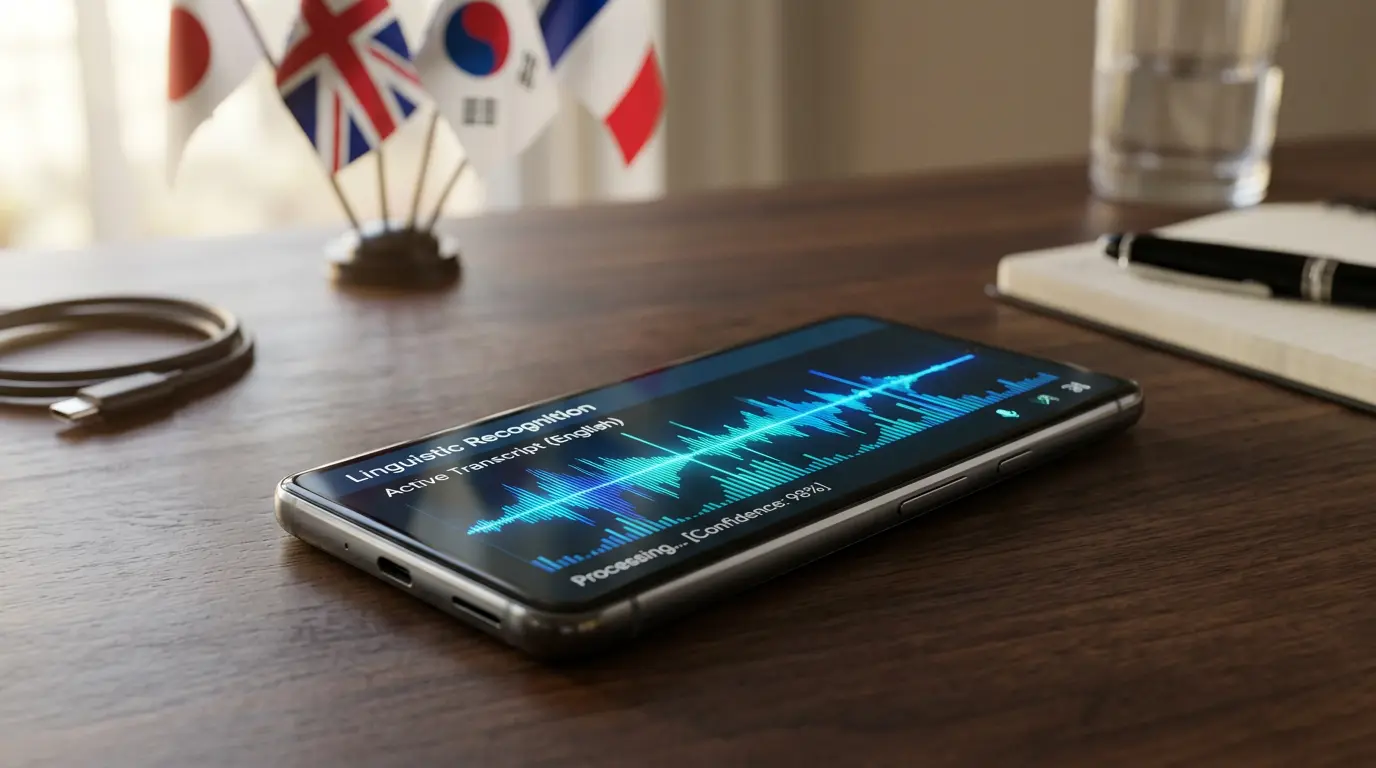
OpenAI released three new voice models on May 7, 2026 – GPT-Realtime-2, GPT-Realtime-Translate, and GPT-Realtime-Whisper – through its Realtime API, enabling developers to build applications capable of real-time translation, speech-to-text transcription, and reasoning-capable voice conversations. According to OpenAI’s own characterization, which has not been independently benchmarked, GPT-Realtime-Translate supports over 70 input languages and 13 output languages, while GPT-Realtime-2 achieves sub-500ms response times for complex reasoning tasks.
The release has direct implications for small business customer service operations, multilingual sales support, and any client-facing workflow where language barriers or staffing constraints limit service capacity.
What Is Actually Changing in OpenAI’s Realtime Voice Models
Prior to this release, OpenAI’s voice capabilities in the Realtime API, which debuted in October 2024, were limited to basic, low-latency call-and-response interactions. The May 7 launch replaces that framework with three discrete models, each handling a different layer of voice intelligence rather than bundling all functions into a single endpoint.
GPT-Realtime-2 is the flagship model, built on GPT-5-class reasoning. It supports tool calls, mid-conversation interruptions, and input caching – the last of which OpenAI prices at $0.40 per 1 million cached input tokens as a cost-efficiency mechanism for developers running high-volume interactions. Standard pricing for GPT-Realtime-2 is $32 per 1 million audio input tokens and $64 per 1 million audio output tokens, according to reporting from 9to5Mac. That token-based pricing structure differs materially from the per-minute model applied to the other two tools and will require operators to estimate conversation length and complexity before projecting costs.
GPT-Realtime-Translate processes audio input in more than 70 languages, including Hindi, Arabic, and Swahili, according to available benchmark documentation, and produces output in 13 languages, including Spanish, French, and Mandarin. It is designed to match the speaker’s conversational pace rather than introducing a perceptible delay between input and translation. Pricing is $0.034 per minute. GPT-Realtime-Whisper, the transcription model, converts streaming speech to text in real time and is priced at $0.017 per minute – roughly half the translation rate – and is optimized to reduce latency in applications like live captions or meeting notes.
OpenAI describes three developer use patterns the models are designed to support: voice-to-action, where a spoken description triggers task completion; system-to-action, where an application converts contextual data into spoken guidance; and voice-to-voice, where the system supports live multilingual conversation. The company has not disclosed accuracy benchmarks broken down by language pair, performance degradation under noisy audio conditions, or any published data on transcription error rates for non-English input at varying accents – details that would be material to operators evaluating the tools for production customer service use.
“Together, the models we are launching move real-time audio from simple call-and-response toward voice interfaces that can actually do work: listen, reason, translate, transcribe, and take action as a conversation unfolds.”
– OpenAI, company statement, May 7, 2026
The statement describes design intent across the model suite and does not specify performance thresholds, accuracy floors, or the conditions under which the described capabilities were validated.
The Opportunity and the Access Barriers for Smaller Operators
The genuine upside for small businesses is concrete. A retailer, service provider, or hospitality operator serving a multilingual customer base currently faces a binary choice: hire bilingual staff or accept service gaps. At $0.034 per minute, a small business handling 500 minutes of translated customer calls per month would incur approximately $17 in translation costs – a figure that compares favorably against the loaded cost of a bilingual support hire, even part-time. The transcription function at $0.017 per minute adds a parallel capability: automated call logging, searchable records of customer interactions, and real-time notes without a dedicated administrator.
OpenAI also notes embedded content moderation – specific triggers that halt conversations flagged for harmful content – which reduces one category of deployment risk for operators who cannot monitor every customer interaction in real time. The company stated that “conversations can be halted if they are found to violate our harmful content guidelines,” though it has not published a taxonomy of what those guidelines cover or how edge cases in customer service contexts are handled.
The access barriers begin with the integration requirement. All three models are accessed via the Realtime API, so operators without developer resources cannot deploy the tools directly. Unlike a software-as-a-service product with a no-code dashboard, building a functioning customer service voice agent with GPT-Realtime-2 requires API integration work – connecting the model to phone systems, ticketing platforms, or website chat infrastructure. OpenAI has not disclosed whether pre-built connectors for common SMB platforms such as Shopify, Zendesk, or Twilio will be available at launch, nor has it specified the minimum technical requirements for integration.
The pricing structure, while low in absolute per-minute terms, carries a less visible cost layer for GPT-Realtime-2. Token-based pricing means a five-minute customer service call involving complex reasoning – product lookups, order changes, policy explanations – will generate a variable token count that is difficult to forecast without testing. Operators accustomed to flat-rate telephony or per-seat SaaS pricing will need to instrument usage monitoring before they can reliably budget around this model. The per-minute pricing for Translate and Whisper is more predictable, but does not include the reasoning and action-taking capabilities that would make the tools genuinely autonomous rather than simply transcriptive.
The performance benchmarks OpenAI and affiliated sources cite – sub-500ms response times, parity with speaker pacing across 70-plus input languages – were generated under conditions that have not been independently replicated. Real SMB deployment environments involve variable call quality, background noise, regional accents not represented in benchmark language sets, and simultaneous use cases that may strain latency targets. Analysts cited by Quartz projected 30% cost savings in call centers via automated multilingual handling, but that figure originates from vendor-aligned characterization and does not account for the implementation, maintenance, or error-correction costs that accrue when automated voice systems mishandle calls in production.
What the Industry Is Building and What Operators Can Do Now
OpenAI’s May 7 release is not an isolated product move. Amazon Web Services has been expanding AI capabilities in its Amazon Connect customer service platform, building toward similar agentic voice and routing capabilities from within an established telephony infrastructure. The competitive dynamic is significant for SMBs evaluating build-versus-buy decisions: OpenAI’s Realtime API requires custom integration, while platform-embedded solutions from AWS bundle AI into existing call center tooling, potentially at higher base costs but with lower integration friction.
The broader pattern across the industry is a shift from AI as a back-office productivity tool toward AI as a customer-facing interaction layer; a transition visible in how companies across sectors are deploying AI for operational improvements, as seen in DoorDash’s recent AI merchant onboarding and visibility tools launch. OpenAI has signaled further expansion of the Realtime API to include video understanding by Q3 2026, with custom voice cloning tools in beta expected next month and integrations with partners, including Zoom and Twilio, anticipated at the Build conference on June 10, 2026. Those integrations, if confirmed, would materially lower the technical barrier for SMBs already operating on those platforms – and would be the clearest signal yet about whether the tools are genuinely accessible to operators without dedicated development resources.
For operators evaluating these tools now, several concrete steps apply:
- Audit your current multilingual service gap – Before pricing out GPT-Realtime-Translate at $0.034 per minute, quantify the actual monthly call volume involving non-English speakers and the current cost of handling or dropping those interactions. The per-minute rate only becomes meaningful relative to a baseline.
- Assess your API integration capacity – All three models require Realtime API access through a developer integration. Confirm whether your business has in-house development resources or an existing vendor relationship that can handle the integration with your phone system or support platform before treating this as a near-term deployment option.
- Test GPT-Realtime-Whisper before GPT-Realtime-2 – The transcription model at $0.017 per minute carries predictable per-minute pricing and a narrower technical footprint than the reasoning model. Piloting Whisper for call logging or meeting transcription provides a lower-risk entry point to evaluate latency and accuracy in your actual operating environment before committing to token-based pricing under GPT-Realtime-2.
- Model token costs for GPT-Realtime-2 against realistic call scenarios – At $32 per 1 million audio input tokens and $64 per 1 million audio output tokens, estimate costs using your average call duration and expected reasoning complexity. OpenAI’s $0.40 per 1 million cached input tokens rate for repeated context offers a cost-efficiency lever for high-volume applications but requires architecture planning to implement.
- Monitor the June 10 Build conference for Zoom and Twilio integration announcements – If OpenAI confirms native integrations with either platform, the no-code or low-code deployment path for SMBs changes significantly. Operators already running customer service on Twilio-based systems should treat that date as the clearest near-term signal about real accessibility.
- Document accuracy failures during any pilot period – OpenAI has not published transcription error rates by language or accent profile. Log instances where translation or transcription produces incorrect output during testing, and evaluate whether the error rate in your specific language pairs and audio conditions is acceptable for customer-facing deployment before scaling.
Whether the sub-500ms response times, cross-language parity, and cost savings OpenAI has characterized – drawn from internal benchmarks and vendor-aligned analyst projections rather than independent SMB deployment data – will materialize at comparable rates for small operators running customer service on variable-quality phone lines, across underrepresented regional accents, and without dedicated developer resources to maintain the integration remains the question the May 7 launch raises without fully answering.