
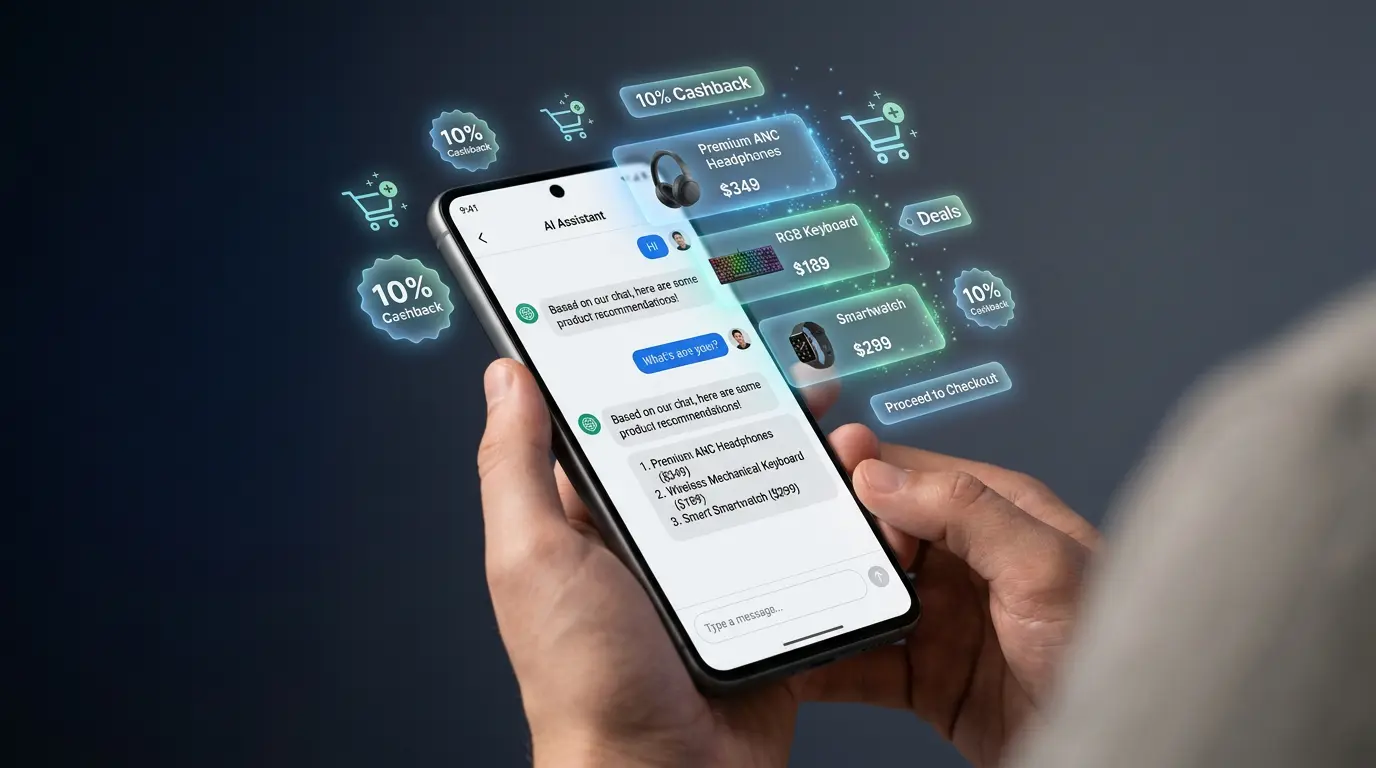
Minty, an e-commerce rewards platform, has launched an AI-powered shopping companion that delivers deals and cashback offers directly inside ChatGPT conversations, embedding a transactional layer into what has previously been a research-only interface. According to Minty’s own characterization, which has not been independently benchmarked, 70% of U.S. shoppers already use or are exploring AI to find better deals – a figure drawn from Minty’s own consumer research and not verified by a third party. The integration affects the customer acquisition and discovery workflows that small and mid-sized merchants have historically managed through paid search, affiliate networks, and browser extension platforms like Honey.
The launch positions Minty as an early entrant in what the Interactive Advertising Bureau (IAB) has characterized as a structural shift in how consumers evaluate products. Collin Colburn, VP of commerce and retail media at the IAB, described the development as part of a broader industry reconfiguration: new approaches to integrating offers, incentives, and commerce signals directly into conversational environments reflect a shift in how the industry approaches influence and conversion. The prior state of ChatGPT did not include any native commerce or affiliate layer; product mentions within conversations were informational only, with no deal surfacing, cashback tracking, or conversion attribution.
What Is Actually Changing in Minty’s ChatGPT Integration
The integration operates through ChatGPT‘s apps directory using the Model Context Protocol (MCP), an open standard that allows third-party tools to exchange structured data with large language models portably across AI providers. Setup is a one-time process: users navigate to the apps directory inside ChatGPT, search for Minty, and click Connect. Once connected, Minty reads shopping-related context from conversations – including product categories, brand mentions, and purchase intent signals – and surfaces relevant cashback offers and verified deals in real time without requiring the user to leave the chat interface.
The functional change for the end user is the addition of a deal comparison layer alongside ChatGPT’s existing product recommendations. Minty’s CMO, Rodney Mason, described the mechanic directly: if ChatGPT recommends Nike but Adidas is a close second and carries a cashback offer, Minty surfaces both pieces of information factually within the same conversation. Minty partners with over 10,000 brands to syndicate verified offers, and the company states that every offer in its network was placed there by the brand as part of a deliberate marketing strategy – not inserted by Minty editorially. What Minty has not disclosed publicly is the specific algorithmic logic governing which offers surface in which conversations, or whether offer placement priority can be influenced by commercial terms beyond the brand’s initial enrollment in the network.
On conversion tracking, Minty says it can follow a purchase across devices and browsers using affiliate tracking, meaning a user who encounters a deal inside ChatGPT but completes the transaction in a separate browser or mobile app can still receive cashback credit and the originating brand can still receive attribution. Mason noted that cross-device journey stitching occurs only when the transaction originates within a Minty session; journeys that begin outside Minty and later intersect with it are not connected. The company states that data used in this process is aggregated and de-identified, that it does not sell personal data, and that users can request, review, or delete their data at any time – though the specific technical mechanism for that deletion request has not been detailed in available public documentation.
The Opportunity and the Access Barriers for Smaller Operators
The genuine upside for merchants is access to high-intent buyers at the moment of active product research, without paying for clicks or impressions that do not convert. Minty operates on a performance-based model, meaning brands pay only when a verified purchase occurs – a structure that differs from paid search, where spend accumulates regardless of outcome. For small merchants managing tight customer acquisition budgets, a cost-per-acquisition model inside a high-engagement AI interface carries real appeal, particularly as conversion optimization at the checkout and discovery stages becomes more competitive across digital channels.
The barriers, however, are less visible but worth examining. Minty’s public-facing network is described as comprising over 10,000 brands, but the company has not published the criteria for brand enrollment, the fee structure for participation, or whether self-serve access is available to merchants without existing affiliate or agency relationships. The research background indicates that Minty teased an SMB self-serve dashboard at a June 2026 industry event, but no confirmed launch date or pricing for that tier has been announced. Until that capability is live and publicly priced, the integration functionally serves brands that already operate within managed affiliate or retail media programs – a category that skews toward enterprise and mid-market retailers.
Platform dependency is also a concrete risk. Minty’s ChatGPT integration is live because OpenAI’s apps directory and MCP infrastructure support it. If OpenAI modifies its apps policy, adjusts revenue-sharing terms, or builds a competing native deals layer, Minty’s channel access could change without notice to the brands or merchants enrolled in its network. Minty’s use of the portable MCP standard offers some mitigation – the company states the integration can transfer to other AI providers – but ChatGPT currently accounts for the primary user base, and distribution on alternative platforms has not been confirmed at a comparable scale. Research into how online shoppers verify products and evaluate trust signals before purchasing suggests that the context in which a deal appears – inside an AI assistant versus a dedicated coupon site – will affect how different consumer segments respond to cashback offers, a variable Minty’s published data does not address.
What the Industry Is Building and What Operators Can Do Now
Minty is not the only platform moving commerce features into conversational AI. Perplexity AI has tested shopping integrations with direct product links and price comparisons, and the broader LLM commerce category is drawing attention from affiliate networks, retail media platforms, and browser extension operators who previously competed in adjacent channels. The IAB’s Colburn framed the shift as industry-wide: AI-driven discovery is reshaping how consumers evaluate products and how brands show up in those moments. How quickly competing tools reach parity with Minty’s MCP-based integration – and whether AI platforms introduce their own native commerce tiers – will determine whether first-mover advantage in this channel translates to durable distribution or an early position in a quickly commoditized space. The emergence of new commerce channels requiring distinct technical integrations has historically created short windows for smaller operators before consolidation raises the entry cost.
For small merchants and digital marketers evaluating these tools now, several concrete steps apply:
- Audit your affiliate program status – Determine whether your brand is already enrolled in an affiliate network compatible with Minty’s syndication infrastructure, as existing affiliate relationships are the most likely path to early access.
- Review your cashback offer strategy – Minty’s model requires brands to opt in with specific verified offers; assess whether your current promotional structure supports a cashback component without margin compression that exceeds your customer acquisition cost targets.
- Monitor the MCP ecosystem – The Model Context Protocol is portable across AI providers; track which other LLM platforms adopt MCP-compatible commerce tools, as distribution will likely expand beyond ChatGPT within the next product cycle.
- Pressure-test cross-device attribution claims – Before enrolling, ask Minty or any similar platform for third-party-verified attribution data specific to your product category and average order value, not aggregate network benchmarks.
- Track the SMB self-serve tier announcement – The self-serve dashboard Minty described publicly has not launched with confirmed pricing; wait for that documentation before building budget assumptions around the channel.
- Assess platform concentration risk – If ChatGPT-driven discovery becomes a meaningful share of your referral traffic, document that dependency and maintain parallel acquisition channels to limit exposure to policy or algorithm changes.
Whether the performance-based conversion rates and brand visibility gains Minty has described – drawn from a network currently weighted toward established brands with existing affiliate infrastructure and verified offer catalogs – will materialize at comparable rates for independent merchants operating without agency partners, managed affiliate programs, or the margin headroom to fund cashback incentives remains the question the integration’s launch raises without fully answering.