

A surprise tax bill in April is not a tax problem; it’s a system failure that played out over the previous twelve months. That distinction matters because the fix for a broken CPA relationship looks nothing like the fix for a bookkeeping gap or a missed planning strategy, even though the symptom in April looks identical across all three. Tax advisor Tal Binder, writing in Entrepreneur and drawing on work with hundreds of business owners, identifies four specific failure modes that account for nearly every surprise bill small business owners face.
The IRS compounds the risk by expecting most business owners to pay as they earn, not as they file. Owners who expect to owe at least $1,000 for the year are generally required to make quarterly estimated payments; missing those payments triggers underpayment penalties calculated at a variable rate tied to the federal short-term rate, which has risen materially in recent years. The four mistakes below are not abstract – each one has a concrete mechanism, a specific consequence, and a correction that can still be made before December 31.
Relying on a CPA who only shows up once a year is the most common failure
The most widespread mistake is the simplest to diagnose: the CPA is heard from when documents are due and not before. No quarterly estimates, no mid-year check-ins, no conversation about whether a deal closed or revenue doubled. The return filed in April may be entirely accurate, but as Binder puts it,
“The return is accurate, but accuracy isn’t guidance – it’s tax work after the year is closed.”
Without estimated payments made throughout the year, the first time an owner sees the tax number is also the first time they have any chance to react to it, which is too late to act on it. The financial consequence is not just a large check in April; it can include underpayment penalties on top of the balance owed, calculated for each quarter the payment was short. The correction at this level is not necessarily to switch CPAs immediately, but to recognize clearly what the current arrangement actually delivers: tax preparation, not tax advice.
This category of compliance failure (late or missing estimated payments) appears on the IRS list of the most common and costly small business tax risks, alongside late employment tax deposits and failure to separate business and personal expenses.
Using safe harbor estimates as a year-round answer when the rules or the numbers have changed
Paying 100% or 110% of the prior year’s tax liability in estimated payments, depending on income level, is a legitimate and often appropriate tool for most of the year. The problem is treating it as a permanent substitute for a real projection. Three specific situations break the safe harbor approach, and any one of them can produce a large unexpected liability.
First, some taxpayers are legally barred from using it. For 2026 in California, taxpayers with adjusted gross income of $1 million or more cannot use the prior-year safe harbor at all – they are required to pay 90% of their current-year tax liability in estimated installments. A CPA still issuing vouchers based on last year’s figures for a high-income California client is generating a penalty before the return is even opened. Second, safe harbor is calibrated to a prior year that no longer reflects the business – a liquidity event, a major contract, or significant revenue growth makes last year’s number structurally misleading. Third, by the fourth quarter, enough of the year is visible that a projection-based estimate becomes both possible and necessary; waiting until filing to see where the year landed forfeits the window to act.
Projection-based estimates cost more than safe harbor vouchers – they require scenario modeling, and any firm capable of doing them well will charge for the work. That is a real cost, not a free upgrade, but it is one with a quantifiable alternative: the penalty and payment surprise it prevents.
Poor financial systems that prevent the CPA from doing the work even when they are willing to do it
At this level, the failure shifts from the CPA to the owner’s operations. The advisor is capable and willing to run projections, but they have been asking for current profit-and-loss statements, documentation of owner draws, equipment purchase records, and quarterly payroll figures, and none of it is available in usable form. The projection either fails to run or runs on stale data, and the relationship drifts back to its previous level by default.
The IRS identifies failure to separate business and personal expenses as one of the four most common small business tax errors – not because it is exotic, but because it is nearly universal among owners who have not built a deliberate bookkeeping infrastructure. Mixing funds does not just create accounting noise; it destroys the evidentiary basis for deductions and makes any meaningful tax projection impossible. Advisory firms consistently recommend that owners set aside 25% to 30% of net income in a dedicated tax account throughout the year – a practice that requires clean books to execute accurately.
The fix here is to close books monthly, reconcile processor revenue, and enforce the separation of business and personal accounts. Clean real-time financials are the input that tax strategy cannot function without.
Accurate estimates and no structural planning moves are the most expensive failure because it doesn’t feel like one
This is the failure mode most likely to go unnoticed. The estimates are accurate. The return matches the projection. The bill is not a surprise. The owner still overpaid because no structural decisions were made during the year to reduce the amount owed. Entity selection, reasonable compensation calibration for S-corporation owners, retirement plan design (SEP-IRA, Solo 401(k), or cash balance plan), bonus depreciation timing, the Augusta Rule, Section 199A qualified business income optimization, and state pass-through entity tax elections are all planning levers with hard deadlines – most of them December 31.
Section 199A, the 20% qualified business income deduction introduced under the Tax Cuts and Jobs Act in 2018, is among the more complex of these tools: eligibility depends on entity type, taxable income level, W-2 wages paid, and the nature of the business activity. The deduction is not automatic, and its interaction with reasonable compensation decisions for S-corporation owners means the two cannot be optimized independently. Bonus depreciation rules have been shifting as TCJA provisions phase down, with the 100% first-year expensing rate having stepped down in prior years – timing large equipment purchases without accounting for the current-year depreciation percentage leaves money on the table.
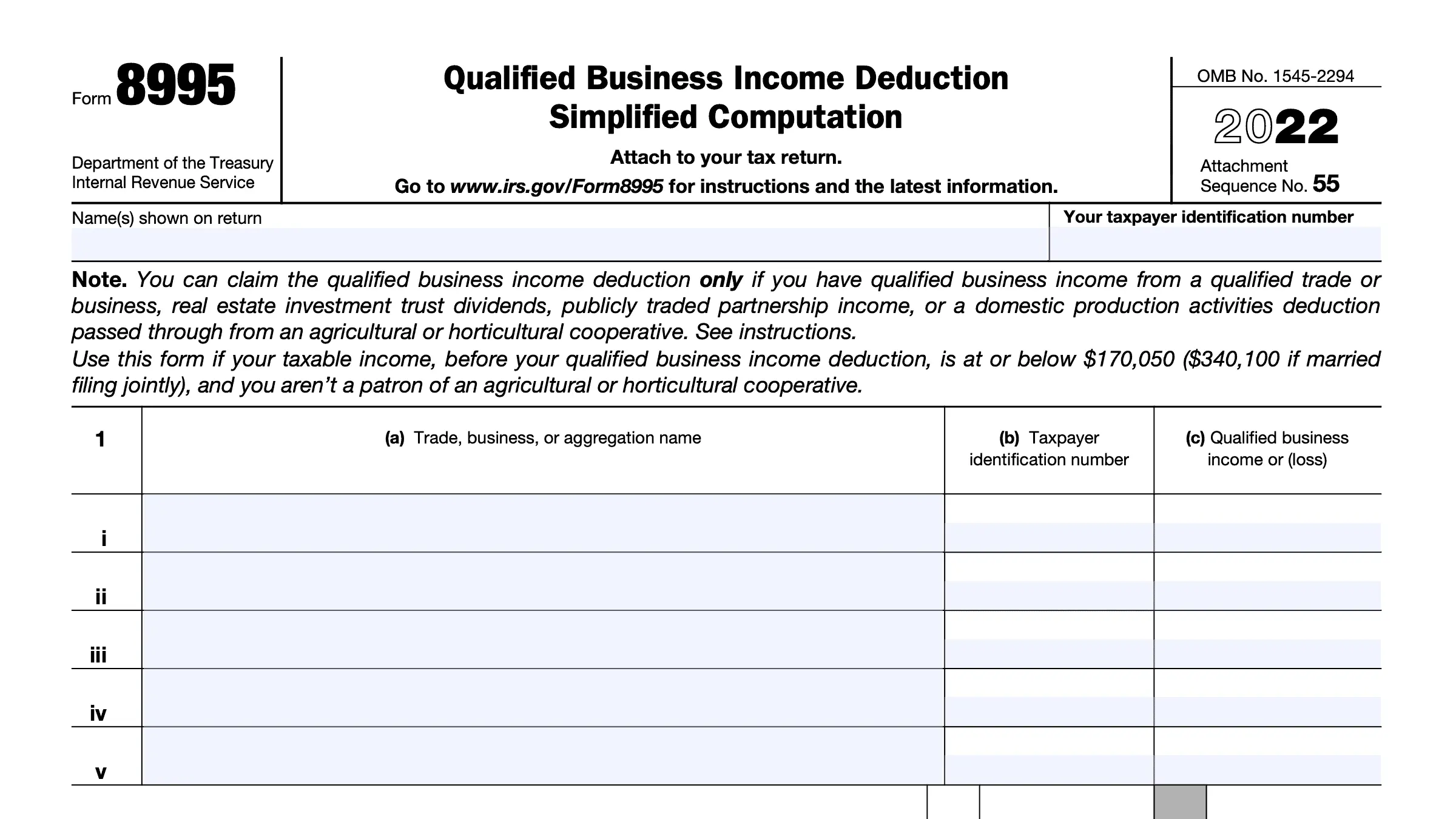
As Binder writes, “If your CPA has never proactively raised any of these with you, you don’t have a tax strategist. You have an accurate reporter of consequences you didn’t influence.”
What to do before the next tax year – four corrections that are still available now
The second quarter of the tax year is the practical window for diagnosing which level applies and making corrections that will still affect the current-year bill. Enough of the year has closed to show how income is tracking; enough remains open to act on what those numbers reveal. Business owners should treat Q2 as a forcing function rather than a passive checkpoint.
Audit the CPA relationship first. If the last substantive tax conversation happened at filing time, the relationship is operating at Level 1. The question is not whether to fire the CPA immediately – it is whether to explicitly request quarterly estimated payment calculations and a mid-year check-in, and whether the current firm is set up to provide them. Assess safe harbor applicability. Owners in California with AGI approaching $1 million should verify immediately whether their current estimated payment strategy remains legally valid for 2026 – the prior-year safe harbor is not available above that threshold, and the penalty clock runs quarterly. Close the bookkeeping gap. If monthly books are not being closed and business and personal accounts are commingled, that problem has a direct cost: it makes every other level of tax planning either impossible or inaccurate. Ask for a planning conversation before Q3. A list of the strategies the CPA has not raised – entity structure, retirement plans, depreciation timing, Section 199A – is a diagnostic in itself. If none of them have come up proactively, the owner is paying for preparation and receiving it under the label of planning.
Moving up the ladder carries a real cost: CPAs who run projections, model scenarios, and flag planning windows charge more than those who file returns. That tradeoff is worth evaluating honestly – some businesses are well-served by a lower-cost, compliance-focused arrangement. The mistake is not choosing a simpler model; it is occupying one by accident and paying as though the more sophisticated service is being delivered.
Tax professionals and the IRS alike note that surprise bills and underpayment penalties are structurally preventable with year-round attention to estimated payments and recordkeeping – the recurring nature of the problem reflects how rarely that attention gets built into a business’s operating rhythm rather than tacked on at filing time. Business owners navigating these decisions should work with a licensed CPA or tax advisor with specific knowledge of their entity structure, income level, and state of domicile, as the thresholds and strategies that apply vary materially by situation.