
 Most companies solicit customer feedback on their products or services in various forms, even though it is hard to find evidence of any strategic benefits derived from its use. Most commonly used methods, surveys and focus groups, are tightly controlled by companies through the selection of the subjects of inquiry and carefully formulated questions that require a quantitative response. These efforts are focused on validation of hypotheses about a product or service’s adoption by target market segments. However, they do little to help the discovery of unmet customer needs or to support construction of alternative hypotheses.
Unsolicited customer feedback, found “in the wild” at online customer reviews sites and forums, is an excellent source of insights comparable to the ones discovered by ethnographic research (by observation). Both methods share the focus on the customer’s outside-in perspective, but “in the wild” feedback provides more statistically representative samples at a much lower cost.
“The only truly unbiased voice-of-customer feedback, I believe, is the feedback you find “in the wild,” that is, by simply observing the comments made by your customers in social media.” Don Pepper
It is a common practice today for many companies to collect and/or monitor both types of customer feedback. The problem is what they do with it. Ultimately, the quality of business outcome trumps what types of customer feedback or methodologies were used to produce it. There is a growing body of evidence that puts a very high value on the use of “in the wild” customer feedback for strategic innovation efforts. Yet, most companies use social media comments to focus on the resolution of public complaints by responding to them at a micro level.
“An ounce of prevention is worth a pound of cure.” Ben Franklin
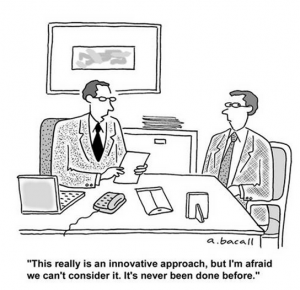
The goal should be discovery and elimination of systemic process/product failures that impact customer experience. However, companies are often skeptical to consider unsolicited customer feedback as a reliable and fertile ore for mining strategic insights. Their management seemingly prefers the comfort of familiar, if not effective, evaluations by the “house” customers at the expense of their brand’s degradation by “in the wild” social consumers. The use of Band-Aids is not effective to stop heavy bleeding.
Since most “tamed” customer feedback is used for validation, and most “in the wild” customer feedback is used for firefighting, the relative ROI should be examined closely. Perhaps a better model would be to start using unsolicited Voice of Customer for selection of subjects for validation.