
We are no longer in a world where simply building links or creating a lot of SEO-friendly content guarantees high rankings. In today’s post-Penguin, post-Panda environment, rankings must be earned, and it’s not easy. It’s clear that Google is working hard to fight spam by pinpointing the tactics that black and gray hats use to get their sites to the top of the search results in a deceptive way. Many people overlook that Google has a role as a search engine, which is to “provide users with the best answers to their search queries.” If all the pages that appear on Google were there just because some SEO experts knew how to manipulate links and content, people would quickly realize that Google wasn’t delivering what they actually wanted. Makes sense, right?
Google is getting smarter as a search engine by updating its algorithm to examine a website’s backlinks, content, and overall structure to ensure it isn’t using any manipulative tactics. In today’s SEO landscape, Google is rewarding websites that focus on making their content user-friendly more than before. Key areas to pay attention to in 2015 should include website responsiveness, user experience (like easy navigation and engaging content), and a strong backlink profile. It’s not as simple as just creating a lot of low-quality links and cleaning up the on-page content; improving rankings and gaining more impressions and clicks from organic traffic is something every business owner will want to achieve this year. I hope this post gives you a good starting point.
Website Responsiveness Leads to More Visitor Engagement
A website that has a ton of traffic doesn’t always translate into profits or revenue generation. When you have a website that is not responsive, typically you end up with a bunch of traffic that ends of leaving because they’re too frustrated with the fact that your website’s content is so tiny they can barely read it. According to USA Today, the amount of users that access the internet while on smart phones continues to increase each year and it doesn’t seem like that trend is going to slow down. If you’re like the many website owners out there that still has a non-mobile responsive website, it’s time to drag yourself into the twenty first century already. Depending on what kind of site you have, it may not be the most difficult thing to do either.
Assuming you have a solid web design company or internal designer/programmer, what you will want to do is simply get your website’s elements (buttons, images, content blocks etc…) to organize themselves according to the type of screen used by the web visitor. For example, if you access the home page of the our website you will see that they layout is completely different then when you access it from a mobile phone. The text is bigger and easier to read and the elements neatly stack on top of each other when you access it from a mobile phone making the site easier to navigate and the content easier to read.
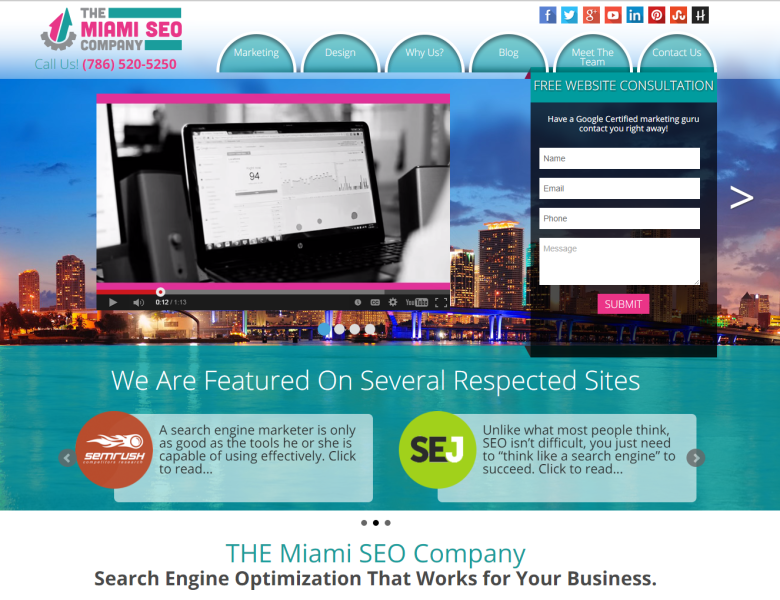
Desktop View (Above)

Mobile View (Above)
As an owner of a marketing company in Miami, I’ve managed several web properties with Google Analytics tracking and one thing that is for sure, sites that are not mobile friendly just do not perform as well as a modern, mobile friendly site that is optimized for usability and of course conversions. Which bring me to my next point.
Assuming you redesign your site to improve upon the performance of your mobile traffic, I’d recommend reading my post on Search Engine Journal titled “Tracking The Impact of Your Website Redesign” so that you can learn how to measure the performance change after the redesign takes place. It’s also highly advised that you read my post titled “SEO Check List For Website Re-designs” which explains how to carefully execute a redesign without harming your SEO rankings. Redesigning a website that has great rankings can be a very slippery slope that leads to a loss of rankings if you’re not careful.
Optimize Your User’s Experience – Visualize the Conversion
Tired of seeing SEO psychobabble all over your pages with keywords stuffed to the point where your website looks like its sole purpose is to manipulate search engines? If you answered yes, it’s likely that your visitors feel the same way but more importantly, Google is TIRED OF IT TOO! Over my years as a SEO professional, I’ve seen several cases where a content overhaul led to a much better conversion rate and in many cases better rankings organically.
Content is still and will likely continue to be king in the realm of SEO but the way Google evaluates content has evolved drastically. With semantic search technology, Google is giving notice to things like structured data, anchor text distribution and “engage-ability” now more than ever. Search engines have had the technology to know when searchers click on results and subsequently return to the results page (indicating the searcher was not satisfied with the result) for many years now and it’s been speculated by many SEO professionals that Google uses this technology in the ranking Algorithm.
It’s worthy to note that in 2008 automated satisfaction measurement for web search was patented by Microsoft, one can only imagine what kind of technologies the rest of the major tech brands that own search engines will roll out to follow suit. A great video blog was published by Moz which covers combating the pogo-stick effect which could be causing your site to fall in the ranks.
When creating or optimizing your websites content, you need to keep in mind that Google heavily evaluates the content you have on your site and off of your site, viewable and not (structured data). If you’re aware of the dangers that come with modifying or changing content on your website, I encourage you to read this post titled “The Do’s and Don’t s of Modifying Your Website’s Content” which gives a very simplified explanation of the best practices for content optimization (for SEO).
Influential Backlinks – Build Trust & Links
The one thing I feel has been overlooked by many as a CRO technique is using back links as trust builders. The theory is, if you’re an expert, share your knowledge and eventually it will become known by many that you are an expert in your field. Believe it or not, showing your web visitors that you are featured as a writer/blogger or as a referenced company/entity can actually help build the trust in your visitors that you’re missing for them to convert.
Becoming a guest writer is not an easy task, especially if it’s on a powerful blog with authority. It’s very much like applying for a job and going through an interview process that involves pitching yourself to a moderator or content manager as well as demonstrating how you would be able to provide value to their blog as an expert in your field.
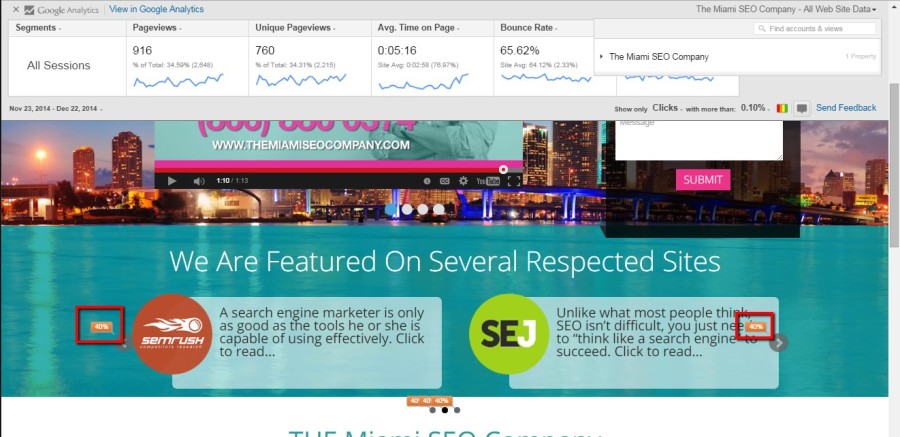
Back when we first opened our marketing company, it was very difficult to build trust with our prospects being that we did not really have that many case studies or a ton of clients ready to provide as a reference. This is one of the common obstacles of running a start-up company that is service based. Guest blog posts were the one thing that we were able to use as a selling tool for our start-up because of the fact that we were well known in the industry as writers on very popular sites like Business 2 Community, The Search Engine Journal, SEMRush and many others. To really showcase this attribute, we added a carousel to our home page that rotates through the different sites that we are mentioned by has increased our conversion rates significantly. Our in-page analytics reports shows that these actually get the most above-the-fold clicks from our home page traffic.
The Take Away?
CRO goes much further than these three tips, there are probably thousands of other things that you can do depending on your circumstance to improve conversion rates. These three recommendations are simply things that I have seen work time and time again and as an analyst I like to rely on large data samples rather than making a recommendation on just a few tests. All of the projects that I’ve managed in 2014 have used these techniques and the conversion rates have all improved significantly as tracked through Google Analytics. Feel free to share your recommendations for CRO in 2015 in the comments section below!